Tuesday, April 24, 2012

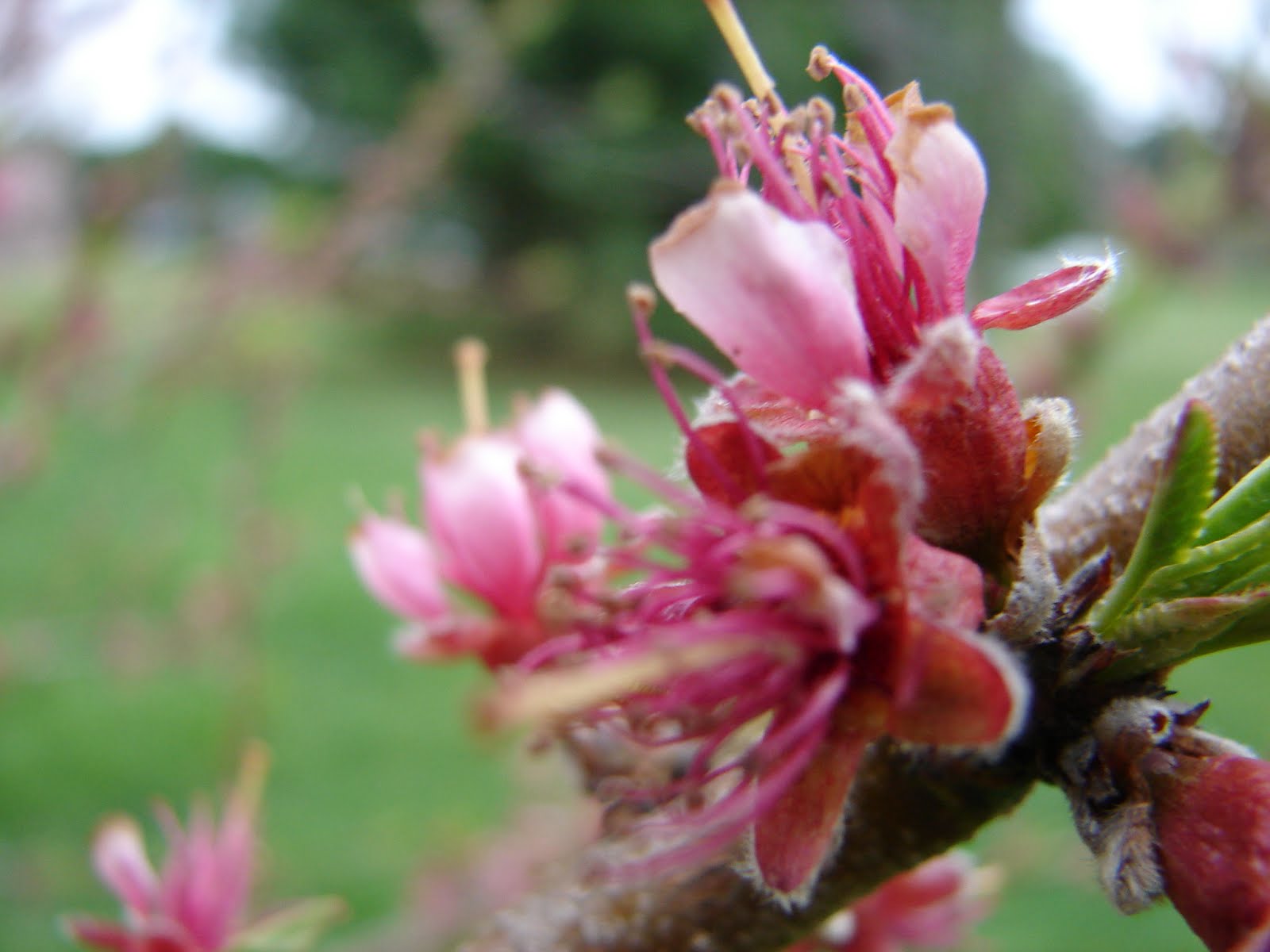
Cherry Blossoms and Pear Blossoms

Cherry and Pear trees are in bloom at One Love Farm. Of course, as I have posted before, everything is three weeks early in Rhode Island this year. That is good news and bad news. The good news is that we will be getting fruits and veggies earlier than normal this year. The bad news is that plants that flower early or are planted early are susestible to environmental factors that might not otherwise effect them.

Let me explain what I mean with an example. If a pear tree blooms at its normal time, the bees known when to pollinate it and the fruit ripens when the weather is perfect. If the tree flowers early, then the bees are not there to pollinate the flowers. The tree could also get hit with a late frost that could damage the flowers and reduce the amount of fruit.

Now, three weeks is not a huge amount of time and the trees are likely to be fine. However, when plant cycles get out of synch with animal cycles or seasonal weather cycles, it could spell trouble for plants and the people who eat those plants fruits.

Monday, April 23, 2012

Rainy Day, Dream Away

We haven't had significant rainfall in Rhode Island since the beginning of March. Two months is a long time to go without rain, especially during the spring growing season. But, I haven't seen any visible effects of the drought on trees or flowers this spring. In fact, flowering plants seem even more vibrant this year, probably due to the unseasonably warm weather.

With three inches of rain falling in the last 24 hours, I'm sure the spring vegetables I've planted will shoot up and take off. Because, no matter how much I water, plants seem to prefer rainfall to drinks from the garden hose.

Sunday, April 22, 2012

What is this?

The pictures above are of a wildflower that blooms in my lawn every spring. A friend once told me that she thought they were Forget Me Nots. But, after doing some research, I found that all Forget Me Nots have five pedals. And, as you can see, these tiny flowers have four. I also thought they might be wild strawberry flowers. Before being cut up into housing tracts, the area where I live used to be a strawberry and pumpkin farm, so wild strawberry would make sense. But, when I inspected the flowers more closely, I saw that they were not a part of the wild strawberry plants that grow in my lawn.

So, what is it? Take a look at the pictures and tell me if you can identify this flower.

A quick word about lawns. Yesterday, I cut the grass for the first time this year. When the original farm was out and houses were built in the 90s, most of the agricultural fields were sodded over. At One Love Farm, one of our goals has been to try and return some of that land to it's original use as farmland. Therefore, I'm not a fan of lawns or grass. My feeling is that most grasses are not native species. Their maintance forces us humans to use lots of resourses, like water, that could be put to better use. Lawns also consume massive amounts of chemicals (fertilizer and and broad leaf herbicides) whose run off contaminates our drinking water. Finally, the oil and gas that is burned in our tractors to cut the grass pollutes our atmosphere.

That said, I have a tractor that I use to cut my ever shrinking lawn, so I am guilty of polluting our air as well. But, I refuse to spray the lawn with herbicide to kill native plants like clover, wild strawberry and dandelion, plants that most people think of as undesirable weeds. I also refuse to water the lawn, allowing it to go dormant in the hot summer. I believe that these practices allow a natural habitat in the ecosystem to thrive. And produce flowers like whatever that one is called.

Saturday, April 21, 2012

Azalea

We only have a couple Azaleas at One Love Farm. Two with the lavender blooms you see above, and one with outrageous orange blooms. The one with orange blooms we got at Kinney Azalea Gardens in Kingston, RI. If you have never been there, GO. Especially now when the azaleas are in bloom. There are over 500(!) varieties of azalea and rhododendron on display. Here is a link to their website.

Friday, April 20, 2012

Daffodils

I've posted about on succession planting on this blog before. Check out this link to a post about succession planting from last year (Unfortunately, the link to the article in the Providence Journal that features pictures of One Love Farm and an interview with me is no longer active.) But, mostly that has been about vegetables. In other words, plant some lettuce one week, some more the following week and some more the next week and so on. This ensures a steady supply of lettuce throughout the season.

You can also do the same thing with perennials. For example, there are strawberries that produce fruit early in the season, mid season and late season. If you plant different varieties, you will get strawberries for several weeks instead of all at once. An advantage for both the people who like to eat the berries and the farmer who harvests them.

At One Love Farm, we had mini daffodils blooming in mid March. Then, full sized daffodils blooming at the end of March/beginning of April. Those blooms are done for the year. But now, we have other varieties of daffodils that are blooming now (the pictures above are the flowers currently in bloom). By planting multiple varieties of bulbs, we get blooming daffodils for two months.

Thursday, April 19, 2012

Baby's Breath


My assumption was that Baby's Breath was an annual, planted every year for the floral industry. Then, Karen planted a Baby's Breath in one of our perennial borders and I have enjoyed watching it bloom every year.

Baby's Breath or Gypsolphila is native to Europe, Northern Africa and Asian. Last year, our Baby's Breath bloomed in May. But, keeping with the theme of everything being three weeks ahead this year, the Baby's Breath started blooming last weekend. Click here for a picture of Baby's Breath blooming on May 8th, 2011.

Tuesday, April 17, 2012

Fastest Germination Ever


My last post was about a new bed I built with my brother. Sunday, I spent the day amending the soil in the bed with compost and planting radish, beet and carrot seeds. As always, I water those seeds daily until they sprout. And, during this hot weather (85 degrees today) I water twice a day to keep the seeds from drying out. Radish seeds will usually sprout in a week. Beets in a week to ten days. Carrots take the longest, as much as three weeks to sprout. So, imagine my surprise when just 48 hours after planting I saw my radishes sprouting. Tiny sprouts just coming out of the ground to be sure, but they are surely coming up!