Monday, April 18, 2011

Peach buds


My peach tree budded out last week. As you can see from the picture, I didn't prune the tree like you are supposed to in March. Next year, I'll make sure I do it in the early spring.

Besides pruning, the other thing you have to do is thin out the peaches. If you don't you will get smaller fruit and I have even seen the peaches so heavy that they break the branches of the tree! The best time to thin out the peach crop is when the fruit is small (about the size of a quarter). According to Ohio State University (where the best study on backyard peach tree growing was written), peaches should be thinned to 8 inches apart.

At One Love Farm we have an issue with birds eating the peaches on the tree. I have tried using bird netting, but found that tree growth during the season makes it tough to get the netting off the tree after the season ends. So, we have hung aluminum pie plates on the tree. The sound and reflection from the pie plates seems to do a good job of scaring off the birds. And that means more peaches for us to enjoy come August.

Tuesday, April 12, 2011

Compost


Rain is forecast intermittently this week. Since I am not moving the rest of the compost until this weekend, I covered the last few yards of compost with plastic sheeting. Because, as much as moving compost by hand is a crummy job, moving wet compost is the worst job ever.

Monday, April 11, 2011

Hollyhock

.
Hollyhocks are one of my favorite flowers in the garden. I posted about my love of this plant last year when they were blooming at the end of June.

Yesterday, I was walking around and saw that some hollyhocks were sprouting up. I expect in 10-12 weeks we will have the wonderful blooms in the garden. If you want to plant hollyhocks, give them a sunny and dry spot. They don't mind the dry conditions that most plants will not tolerate. Hollyhocks do well throughout the United States with the exception of northern New England and some parts of the south, like Oklahoma according to the USDA. Hollyhocks have a long taproot, so once you plant them, they don't like to be transplanted. But, they are easy to grow from seed, so getting new plants is never a problem. In fact, hollyhocks reseed so easily that many people assume they are perennials. In fact, they are biennials, meaning they bloom every OTHER year. So, find that nice sunny and dry spot for your hollyhocks and they will reward you year after year with six, seven, even ten foot spikes of colorful blooms!

Sunday, April 10, 2011

Re Compost


I figured six yards of compost would be enough for the beds this year. Was I wrong. I used up those six yards (162 cubic feet) last week and wasn't even halfway done. So, yesterday I got another eight yards. As you can see from the pictures above, I made a pretty good dent in the pile (and a pretty good dent in my back and shoulders) but I still have about half left. With 900 square feet of planting space left to add compost, I can put down about an inch and a half to two inches of compost. When I add the organic fertilizer, I think it will make for some good planting spaces this spring.

Wednesday, April 6, 2011

Garlic shoots


You get a couple of warm spring days and you want to get outside and start planting. But in reality, there is very little to plant this early in New England. Beets, radishes and peas are a crap shoot which is why we plant a little each week in case the ground is too cold for the seeds to germinate.

A few bulbs are up and some shrubs are starting to bud out. But other than that, about the only thing up is the garlic I planted last fall. By June, those sprouts will be eight times their size, send up a seed head (the garlic scape) which we will cut off to make garlic scape pesto. By fall, we'll have several dozen heads of garlic which we will use long before the next harvest is ready!

Tuesday, April 5, 2011

Japanese Fantail Pussy Willow

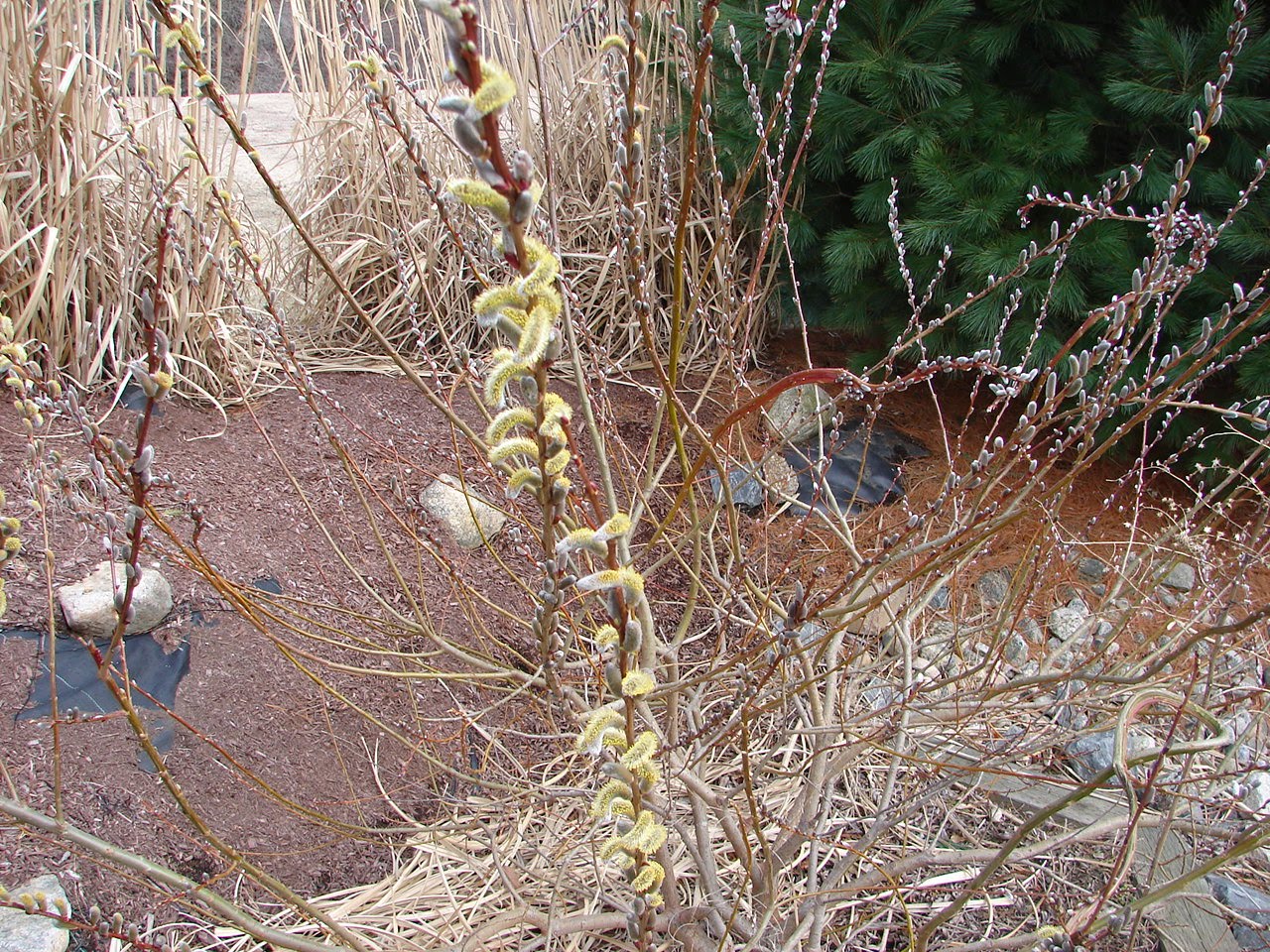
Karen and I bought what we thought was some clumping bamboo. For several years we kept it planted near our pond where it did ok but never flourished and certainly never bloomed. Then, we got another plant and moved our clumping bamboo to another location near the water garden. It did well for you a year and then imagine our surprise when it bloomed this spring. Our clumping bamboo was not clumping bamboo at all but a Japanese Fantail Pussy Willow. The lesson we learned is that if a plant isn't doing well in one spot, it might be that it is not getting proper care or you don't live in a climate zone where it will do well. But, it could be that the plant needs to be in a different location.

Monday, April 4, 2011

Lettuce seedlings


I wrote about Yugoslavian Red heirloom lettuce last year. I've also posted about lettuce going to seed. Now is the time when you start to see some plants from last years plants. Above is a picture of a head of Yugoslavian Red. I'm not surprised to see this plant pop up so early, even with overnight temperatures well below freezing. That's because the Yugoslavian Red loves the cold and is one of the first lettuces to go to seed in hot weather. Over the next couple of weeks I expect to find arugula and oakleaf lettuce plants near the beds they grew in last year. But remember, not all plants will produce well from seeds they drop the year before. For example, many hybrid plants like squash will produce vegetables that are odd looking or inedible due to cross pollination. There are seed saving organizations that can walk you through seed saving in your garden. Or, just let your lettuce go to seed and you will enjoy some more next spring!